SpacExxon: A spacecraft that refuels satellites: Design & Analysis
Most satellites carry a fixed amount of fuel, and in low Earth orbit a typical one lasts only 7 to 10 years. For our senior design capstone, five of us designed, on paper, a spacecraft that could refuel them in orbit. It is a conceptual design study, not a built or flight-ready system.
The problem
As of May 2022 there were 5,465 operating satellites, and estimates run past 100,000 by 2030. When a satellite runs low on fuel, it uses what is left to drop into the atmosphere and burn up. Satellites are mostly aluminum, which can react with ozone, so a wave of re-entries is an environmental worry as well as a cost.
Refueling could stretch mission lifetimes instead. We pitched it as a mock company, SpacExxon: a gas station for satellites.
What we did
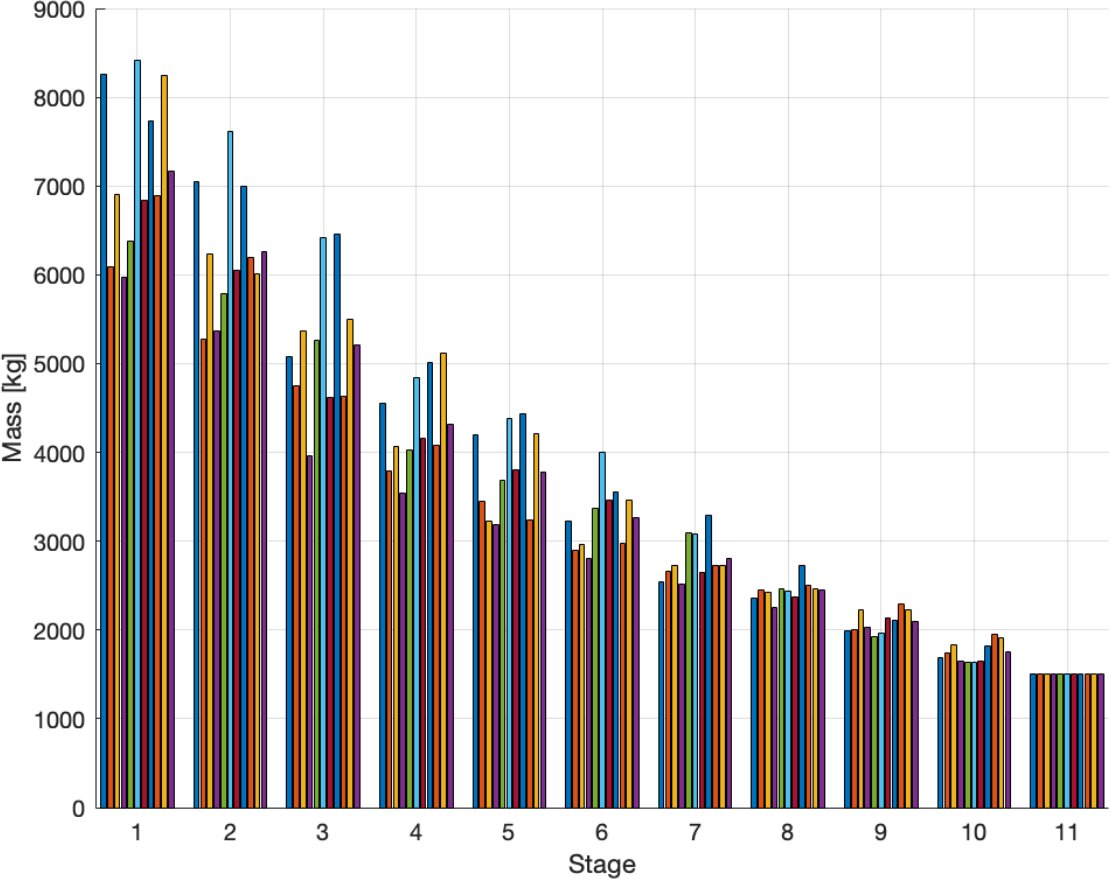
The mission target was 1,000 kg of hydrazine delivered per launch: 100 kg to each of ten satellites, launched on a SpaceX Starship. In MATLAB we worked out the orbital moves between customers, Hohmann transfers (the standard fuel-efficient way to change altitude) and plane changes, and simulated a 10-stop mission to random orbits between 300 and 1,000 km. Hauling that much fuel around takes a lot of fuel itself: the average starting mass came out just under 7,200 kg, about 5,700 kg of it propellant.
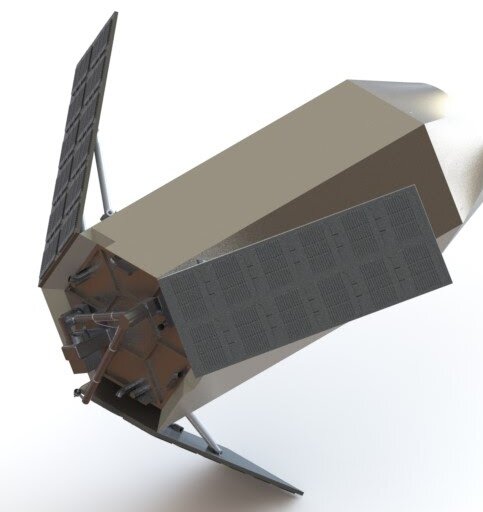
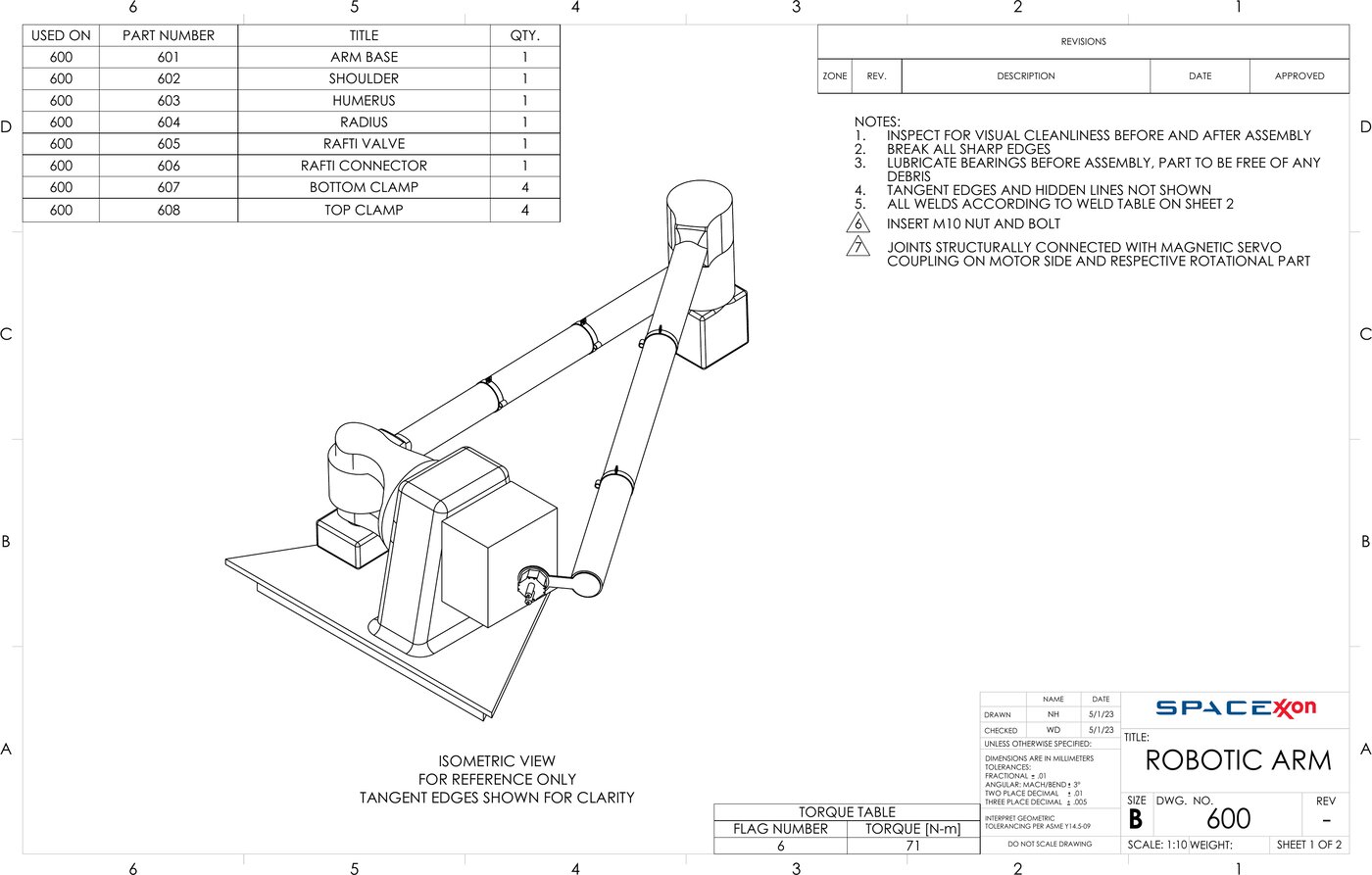
We chose and sized the subsystems (thrusters, a custom titanium hydrazine tank, guidance and navigation, thermal protection including Whipple shielding against debris, and power), plus a three-joint robotic arm that connects through Orbit Fab's RAFTI refueling valve. I designed the arm and did its dynamics analysis. We also ran a plumbing analysis in EES and a six-degree-of-freedom dynamics simulation.
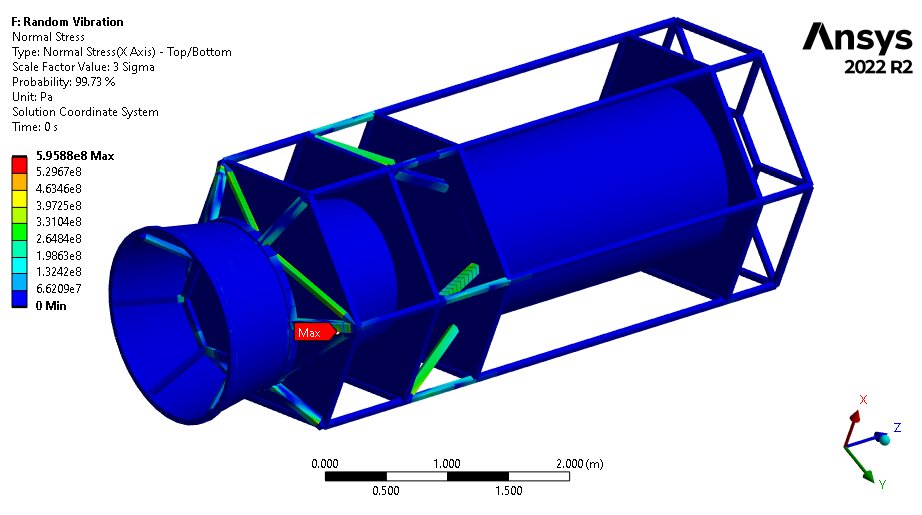
The structure went through two rounds of CAD in SolidWorks and FEA in Ansys: launch accelerations, thruster impulse, modal and random-vibration analyses. The final design comes with a 20-drawing packet to ANSI standards.
Results and limits
In the final structural analysis, stresses stayed below yield in every case except single-point stress peaks at resonant frequencies in the random-vibration analysis. Beams and plates were sized toward a factor of safety of 1.4.
We were honest in the report about how far this is from real hardware. It says heavy iteration and redesign would still be needed before a real mission proposal: control design, arm software and autonomy, and cheaper manufacturing. It also points out that real satellites take whole companies of specialists, not five undergraduates. Still, it is a complete preliminary design, from mission profile to drawings.